
Alwarpet
Derma Med Spa, the Skin Clinic
No. 2, TTK Road, 1st Cross Street, Sriramnagar, Alwarpet, Chennai.- Telephone: 92821 56070
- Hours: All days 10 am – 8pm, Tuesday Holiday
- E-mail: dermamedspaskin@
gmail.com

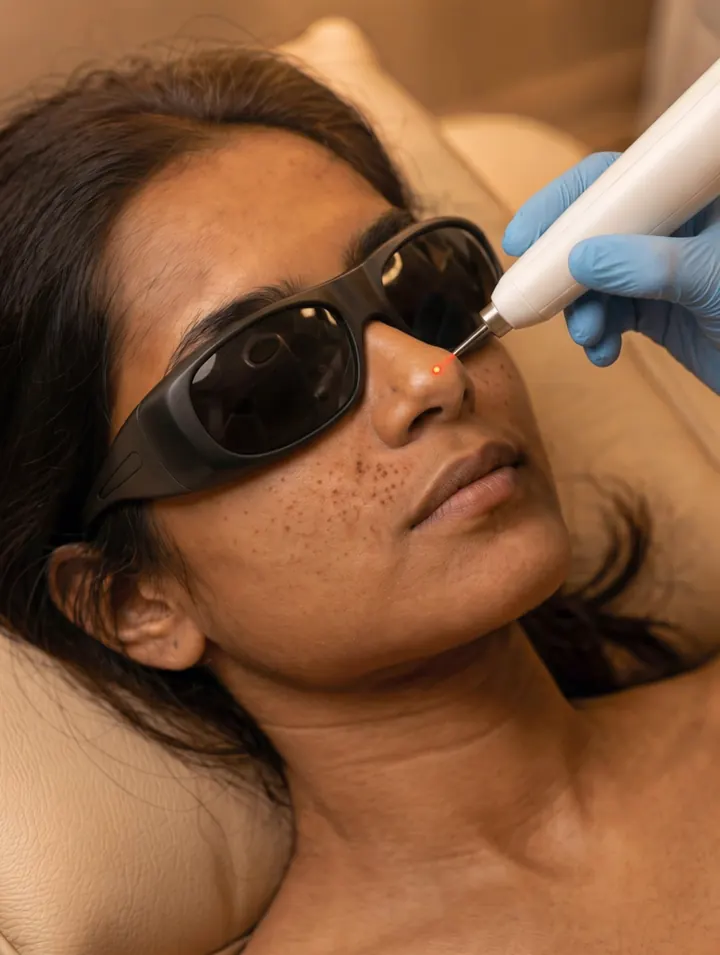
Laser treatment that targets excess pigment, such as sun tan, dark spots and patchy tone, for a clearer, more even complexion. Every plan starts with a dermatologist’s assessment of your skin.
92821 56070 – Alwarpet 98847 56070 – Anna Nagar
Clarity, not a new complexion
The laser treats excess pigment. Your natural skin tone stays your own.
The treatment
Targets excess pigment Treatment focuses on darkened areas rather than your overall skin colour.
Personalised settings The laser and energy level are chosen for your skin type and the depth of the pigment.
A complete plan Sun protection and skincare are part of the treatment, not an afterthought.
Despite its name, skin lightening laser treatment isn’t about changing your natural complexion. It targets areas where excess melanin has built up, such as sun tan, dark spots and uneven patches, so the skin looks clearer and more even.
A medical laser delivers short, controlled pulses of light that are absorbed by pigment in the skin. The excess pigment breaks into finer particles, which the body gradually clears over the following weeks.
Pigmentation has many causes, including sun exposure, hormones, acne and friction, and each responds differently. That’s why our dermatologists first assess your skin, the type and depth of the pigment and what is driving it. They then recommend laser on its own, or as part of a plan with treatments such as chemical peels and medifacials.
What it can help with
Your dermatologist will confirm whether laser suits your concern.
Darkening from UV exposure on the face, neck, arms and hands.
Flat brown spots that build up with sun exposure over the years.
Patchy tone and dullness, often treated gently over a course of sessions.
Brown marks left behind after pimples heal (post-inflammatory hyperpigmentation).
Small sun-related spots that can lighten with targeted treatment.
May respond, but often returns and needs a careful, combined plan. Your dermatologist will advise.
Darkening in skin folds, such as the neck, underarms and knees, can have medical causes. Your dermatologist checks for these before recommending treatment.

Understanding pigmentation
Hyperpigmentation happens when melanin builds up in one area, so a patch of skin looks darker than the skin around it.
It is especially common in Indian skin, which produces melanin readily to protect itself from the sun. Finding out what is driving the pigment matters as much as treating it: the same dark patch may need a different plan depending on whether it comes from the sun, hormones or inflammation.
Pigment also sits at different depths. Superficial pigmentation, such as sun tan and many dark spots, usually responds sooner. Deeper pigment tends to need more sessions, more patience and a carefully combined plan.
UV and visible light trigger melanin production, causing tan, dark spots and freckles, and making existing pigmentation darker.
Pregnancy, hormonal medicines and other changes can trigger melasma, typically on the cheeks, forehead and upper lip.
Pimples, rashes, burns or irritation can leave brown marks behind as the skin heals.
Rubbing in skin folds, some medicines and certain health conditions can darken areas such as the neck and underarms.
Some people are more prone to freckles or melasma, and sun-related spots build up over the years.
Living in Chennai? Strong sunshine for most of the year makes sun tan and sun-related pigmentation especially common here, and daily sun exposure can quickly undo results. That’s why every skin lightening plan at our Alwarpet and Anna Nagar clinics includes daily sun protection and a realistic maintenance routine.
The science
Melanin, the pigment that gives skin its colour, absorbs specific wavelengths of light. When melanin builds up in one place, it shows as a dark spot or patch. The laser delivers energy that is absorbed mainly by that concentrated pigment.
The type of laser, its wavelength and its energy are chosen by your dermatologist for your skin type and the depth of the pigment. Indian and other darker skin types need especially careful, conservative settings to avoid unwanted pigment changes.
Skin lightening treatments
The best results often come from combining approaches.
Laser is one of several effective ways to treat pigmentation and uneven skin tone. Depending on the type and depth of your pigmentation, your dermatologist may recommend laser on its own or alongside other skin lightening treatments.
| Treatment | Often suited to | How it works | Downtime |
|---|---|---|---|
| Laser treatment | Sun tan, dark spots, freckles and post-acne marks | Light energy breaks up excess pigment, which the body then clears | Usually minimal: brief redness or warmth |
| Chemical peels | Dullness, uneven tone, superficial pigmentation and some melasma | Controlled exfoliation removes pigmented outer layers of skin | Light flaking for a few days, depending on the peel |
| Medifacials | Dull skin and maintaining results between treatments | Deep cleansing, exfoliation and active ingredients for a brighter complexion | Usually none |
| Prescription skincare & sunscreen | Most types of pigmentation, including melasma | Creams that slow melanin production, with daily sun protection to prevent new pigment | None, but needs consistent daily use |
A general guide only. Your dermatologist will recommend what suits your skin.
Why laser
Energy is aimed at pigment, so treatment can focus on the areas that concern you.
No incisions or needles. Many people return to their usual routine soon after a session.
Change builds over a course of sessions rather than all at once.
Can be combined with peels, medifacials or prescribed skincare in one plan.
Well-defined spots such as sun spots and freckles can be treated individually, leaving the surrounding skin alone.
Most sessions take only a short time, depending on the size of the area treated.
As excess pigment clears, skin can look more uniform and radiant.
Settings can be kept conservative for darker skin types, under a dermatologist’s supervision.
Your journey
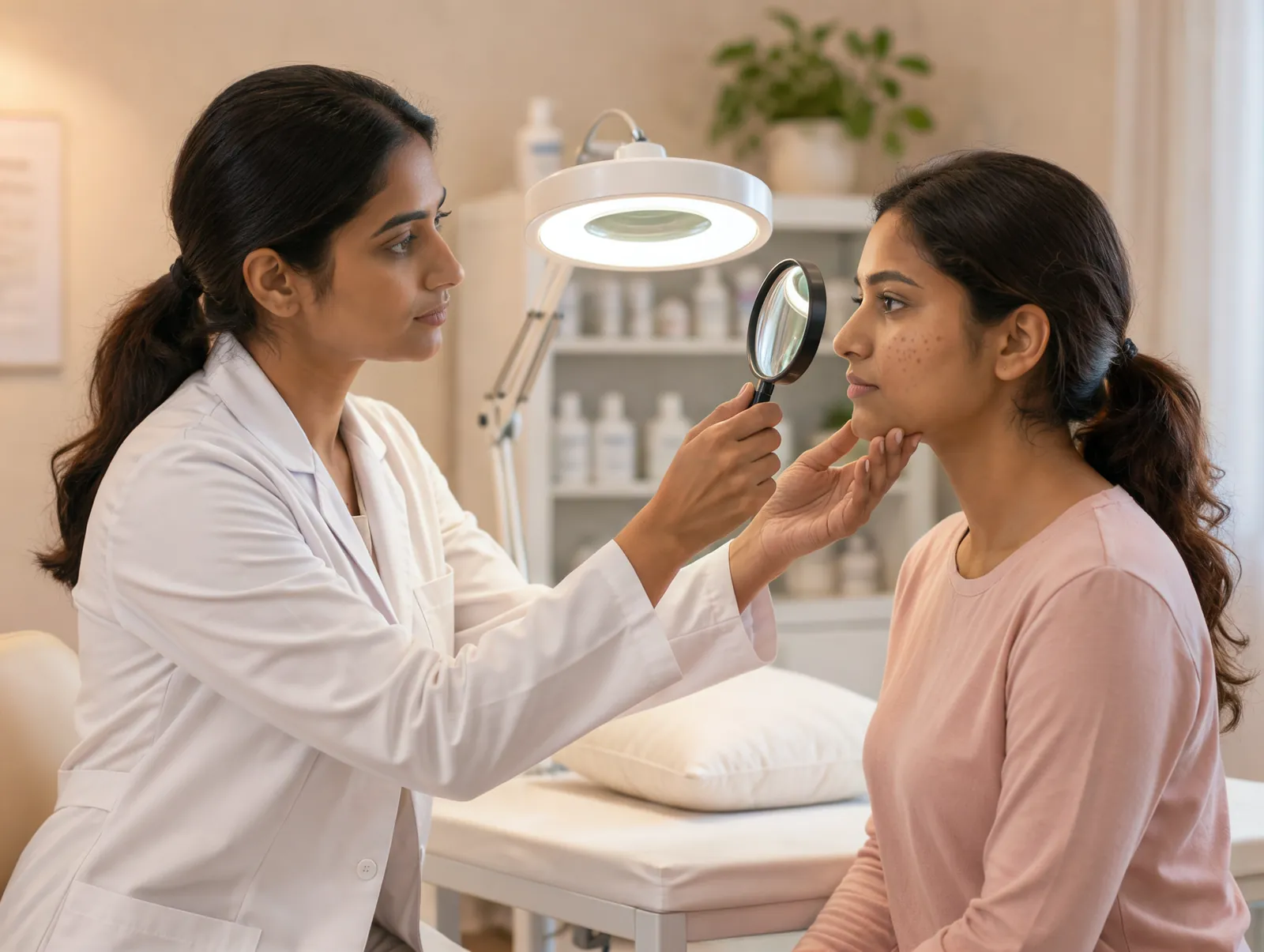
Your dermatologist examines the pigmentation, looks for its likely cause (sun, hormones, acne, friction or medicines) and reviews your skin type and medical history. A test area may be suggested first.
Avoid tanning and use sun protection in the weeks before treatment. You may be advised to use prescribed skincare first. Tell us about any medicines, recent treatments, or if you are pregnant.
The skin is cleansed and your eyes are protected. The laser is then passed over the area in quick pulses, which most people feel as warmth or a light snapping. Sessions are usually short, depending on the area.
Mild redness usually settles within hours to a few days, and dark spots may look darker briefly before they fade. Daily sunscreen is essential. Further sessions are spaced a few weeks apart.
Consultation & safety
An honest assessment comes before any treatment.
Temporary redness, warmth and mild swelling are common and usually settle within hours to a few days. Less commonly, pigment can become darker (post-inflammatory hyperpigmentation) or lighter in patches, especially after sun exposure or over-treatment. That’s why settings are chosen conservatively, a test area may be done first, and aftercare matters as much as the session itself.
After your session
Good aftercare protects your results and helps prevent new pigmentation.
This is general guidance. Your dermatologist will give you instructions specific to your skin and treatment.
Realistic expectations
Laser can noticeably reduce many types of pigmentation, but how much, and how quickly, depends on you.
We don’t use before-and-after photos to promise outcomes. Your dermatologist will explain what is realistic for your skin, the likely number of sessions and how to maintain the result.
Pigment fades over the weeks after each session. Several sessions are usually needed.
Skin type, pigment depth and its cause all affect results, so no two plans are the same.
Sun exposure, hormones and inflammation can trigger new pigment, and melasma in particular can return. Daily sunscreen and occasional maintenance help.
The aim is clearer, more even skin, not a change to your natural colour.
Mild redness or warmth for a few hours to a few days. Treated spots may look slightly darker.
Darkened spots may flake or fade as the skin renews itself.
Gradual lightening becomes visible as your body clears the fragmented pigment.
With further sessions spaced a few weeks apart, skin tone looks clearer and more even.
Timings vary with the type, depth and cause of the pigmentation.
*Results may vary from person to person

Why Derma Med Spa?
Our Dermatologists lead our practice and make clients the number one focus. Each Doctor guides the process of decision making, ensuring all procedures are in the patient’s best interest.
No. The treatment targets areas where excess pigment has built up, such as sun tan, dark spots and patchy tone. The aim is a clearer, more even complexion; your natural skin colour stays your own.
It varies with the type, depth and cause of the pigmentation and with your skin type. Most people need a course of several sessions spaced a few weeks apart. Your dermatologist will recommend a plan after assessing your skin.
Most people feel a warm, snapping sensation with each pulse, which is generally well tolerated. Comfort measures can be discussed with your dermatologist.
Mild redness, warmth or swelling is common and usually settles within hours to a few days. Treated dark spots may look slightly darker before they fade. Most people return to their usual routine soon after, with strict sun protection.
It can be, when the laser and settings are chosen for your skin type and the treatment is planned by an experienced dermatologist. Darker skin has a higher risk of pigment changes after treatment, so conservative settings, a test area where appropriate and careful aftercare are important.
Laser can help some people with melasma, but melasma often returns and can worsen with heat, inflammation or over-treatment. It usually needs a cautious, combined plan that includes skincare and daily sun protection. Your dermatologist will advise whether laser is suitable for you.
Results cannot be guaranteed to be permanent. New pigmentation can form with sun exposure, hormonal changes or skin inflammation, so sun protection and occasional maintenance help to sustain the improvement.
The cost depends on the area treated, the number of sessions recommended and your individual plan. Our team will advise you after your consultation.
Yes, where appropriate. Laser is often combined with treatments such as chemical peels, medifacials and prescribed skincare. Your dermatologist will decide what suits your skin.
The terms are often used interchangeably. Skin lightening laser treatment aims to reduce excess pigmentation, such as tan, dark spots and patches, so your skin looks clearer and more even. It is not designed to change your natural skin colour.
Pigment usually fades gradually over the two to four weeks after a session, and treated dark spots may darken or flake before they fade. Most people need several sessions spaced a few weeks apart for a visible, even improvement.
Yes, but protect the treated skin. Use a broad-spectrum sunscreen every day, reapply it when you are outdoors and avoid prolonged sun exposure, because sunlight can trigger new pigmentation or darken treated areas.
Laser treatment can help reduce stubborn sun tan and sun-related pigmentation by breaking up excess pigment, usually over a few sessions. Daily sun protection is essential, because further sun exposure can bring the tan back.
It depends on the type and depth of the pigmentation. Laser is often used for sun tan, dark spots and freckles, while chemical peels suit dullness and superficial pigmentation. Many people get the best results from a combination, which your dermatologist will plan after assessing your skin.
At Derma Med Spa’s two clinics in Chennai: Alwarpet (No. 2, TTK Road, 1st Cross Street, Sriramnagar) and Anna Nagar (#149, First Floor, 3rd Avenue, opposite ICICI Bank). Call 92821 56070 (Alwarpet) or 98847 56070 (Anna Nagar) to book a consultation.
Book Appointment
Send us your details and our team will call you to confirm a time with our dermatologist.
To book, call 92821 56070 (Alwarpet) or 98847 56070 (Anna Nagar), or message us on WhatsApp.
Visit us
Chennai
Derma Med Spa, the Skin Clinic
No. 2, TTK Road, 1st Cross Street, Sriramnagar, Alwarpet, Chennai.Derma Med Spa, the Skin Clinic
#149, First Floor, 3rd Avenue, Opposite ICICI Bank, Anna Nagar, Chennai – 40